

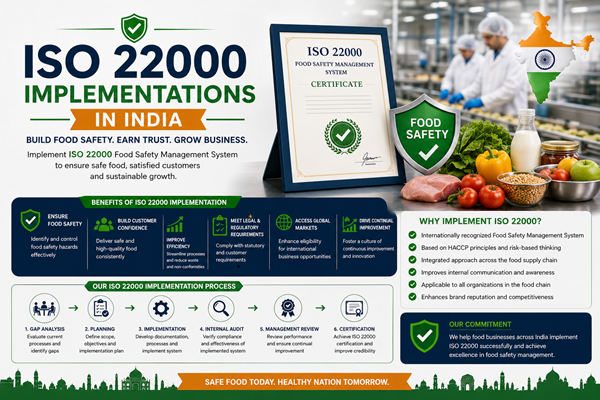
The food industry is growing rapidly in India, and consumers now expect safe, hygienic, and high-quality food products. Businesses involved in food manufacturing, packaging, storage, transportation, and distribution must maintain proper food safety standards to build customer trust and comply with regulations. This is why Iso 22000 Implementations in India have become increasingly important for food businesses of all sizes.
ISO 22000 is an internationally recognized food safety management system standard that helps organizations identify food safety risks and maintain proper control measures throughout the supply chain. Companies implementing this standard can improve operational efficiency, strengthen brand reputation, and ensure food safety compliance.
Jcs Certifications supports organizations with professional guidance and implementation solutions that help businesses achieve ISO 22000 certification smoothly and effectively.
Understanding ISO 22000 Certification
ISO 22000 is a food safety management system standard designed to ensure safe food production and handling. It combines food safety principles with management system requirements to create a structured approach for food safety control.
The standard applies to all organizations involved in the food supply chain. This includes food manufacturers, restaurants, packaging companies, transportation providers, cold storage units, and food ingredient suppliers.
Iso 22000 Implementations in India help businesses identify hazards, monitor food safety processes, and maintain international quality standards. The system focuses on risk prevention, hygiene control, traceability, and continuous improvement.
Why Food Businesses Need ISO 22000
Food safety is one of the most important concerns for consumers and regulatory authorities. A single food contamination issue can damage a company’s reputation and lead to serious financial losses.
ISO 22000 certification helps organizations establish a preventive food safety system that minimizes risks and ensures product quality. Businesses adopting this standard often gain better customer confidence and stronger market credibility.
Jcs Certifications helps companies implement food safety systems that align with international standards and industry requirements.
Growing Importance of Iso 22000 Implementations in India
India’s food industry is expanding rapidly due to increasing consumer demand and export opportunities. Food businesses are now expected to follow strict safety and hygiene practices to remain competitive.
Many organizations are adopting ISO standards to improve food safety management and meet customer expectations. Iso 22000 Implementations in India are becoming common in food manufacturing plants, restaurants, hotels, dairy industries, beverage companies, and agricultural businesses.
International buyers also prefer suppliers with certified food safety management systems. As a result, ISO 22000 certification creates better opportunities for business growth and export expansion.
Major Benefits of ISO 22000 Implementation
Implementing ISO 22000 offers several advantages to food businesses. It helps organizations improve safety standards while enhancing operational performance.
Improved Food Safety
The standard helps businesses identify food hazards and implement proper preventive controls. This reduces contamination risks and ensures product safety.
Enhanced Customer Trust
Customers feel more confident when businesses follow internationally recognized food safety standards. Certification improves brand reputation and customer loyalty.
Regulatory Compliance
ISO 22000 helps organizations comply with food safety laws and government regulations more effectively.
Better Operational Efficiency
Businesses can streamline processes, reduce waste, and improve productivity through effective management systems.
International Market Access
Certified companies gain better opportunities to enter international markets because global clients prefer suppliers with proper food safety certifications.
Iso 22000 Implementations in India are helping businesses strengthen their market position while improving food quality standards.
Steps Involved in ISO 22000 Implementation
Implementing ISO 22000 requires careful planning and proper execution. Organizations must follow a structured process to achieve successful certification.
Gap Analysis
The first step involves assessing current food safety practices and identifying areas that need improvement.
Documentation Development
Businesses must prepare food safety manuals, procedures, policies, and operational records according to ISO requirements.
Hazard Analysis
Organizations identify potential food safety hazards and establish preventive control measures.
Employee Training
Employees receive training on hygiene practices, food safety procedures, and system implementation.
System Implementation
Food safety procedures are implemented across all departments to maintain consistency and compliance.
Internal Audit
Internal audits help businesses evaluate system effectiveness and identify improvement areas before certification.
Certification Audit
An accredited certification body conducts the final audit to verify compliance with ISO 22000 standards.
Jcs Certifications provides complete support during every stage of implementation to help businesses achieve certification successfully.
Industries That Benefit from ISO 22000
Many industries within the food supply chain can benefit from ISO 22000 certification.
Food Manufacturing Companies
Manufacturers use ISO systems to maintain product safety and improve production quality.
Restaurants and Hotels
Hospitality businesses implement food safety systems to maintain hygiene standards and protect customer health.
Dairy and Beverage Industries
Dairy farms and beverage manufacturers adopt ISO standards to control contamination risks and improve product consistency.
Food Packaging Companies
Packaging businesses ensure safe packaging materials and maintain proper hygiene procedures.
Transportation and Storage Providers
Cold storage facilities and transport companies implement food safety measures to protect food quality during distribution.
The increasing demand for Iso 22000 Implementations in India shows how important food safety management has become across industries.
Role of Jcs Certifications in ISO 22000 Implementation
Many organizations face challenges during food safety system implementation because of technical requirements and documentation complexity. Professional guidance can make the process easier and more effective.
Jcs Certifications offers complete implementation support for businesses seeking ISO 22000 certification. Their experienced team helps organizations understand standard requirements and establish practical food safety systems.
The company provides documentation assistance, staff training, internal audit support, and certification guidance. This structured approach helps businesses improve compliance and operational performance.
Organizations working with Jcs Certifications receive customized solutions that match their industry requirements and business objectives.
Common Challenges During ISO 22000 Implementation
Businesses may experience certain difficulties during implementation. However, proper planning and expert support can help overcome these challenges.
Lack of Food Safety Awareness
Employees may not fully understand food safety procedures initially. Regular training improves awareness and participation.
Documentation Management
Maintaining proper records and procedures can be time-consuming. Businesses need organized documentation systems for effective compliance.
Resistance to Process Changes
Staff members may resist operational changes during implementation. Clear communication and leadership support can solve this issue.
Monitoring and Verification
Continuous monitoring is essential for maintaining food safety standards. Organizations must establish proper review systems to ensure effectiveness.
Jcs Certifications helps businesses address these challenges with practical implementation strategies and professional guidance.
Importance of Continuous Improvement
ISO 22000 certification is not a one-time process. Organizations must continuously improve food safety systems to maintain compliance and operational efficiency.
Regular audits, employee training, hygiene inspections, and management reviews help businesses strengthen food safety performance. Continuous improvement also supports customer satisfaction and long-term business growth.
Companies investing in Iso 22000 Implementations in India understand the importance of maintaining consistent food safety standards in a competitive market.
Future of ISO 22000 in India
The future of food safety management in India looks highly promising. Consumers are becoming more aware of food quality, hygiene, and safety standards. Government regulations are also becoming stricter to protect public health.
As a result, more businesses are expected to adopt food safety management systems in the coming years. Iso 22000 Implementations in India will continue to grow as organizations focus on quality assurance and international market expansion.
Companies implementing ISO 22000 today will gain long-term advantages in customer trust, regulatory compliance, and operational excellence.
Conclusion
Food safety has become essential for every organization involved in the food supply chain. Iso 22000 Implementations in India help businesses improve food quality, maintain hygiene standards, and build customer confidence.
Organizations implementing ISO 22000 gain better operational control, stronger market reputation, and improved compliance with food safety regulations. With professional support from Jcs Certifications, businesses can successfully establish effective food safety management systems and achieve sustainable growth.
Investing in ISO 22000 certification is a smart decision for businesses that want to strengthen food safety practices and achieve long-term success in the modern food industry.