
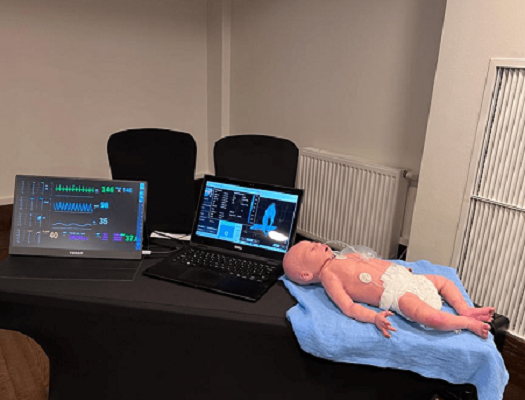
Medical education continues to evolve with advanced simulation technologies that improve practical learning and patient safety. Healthcare institutions now focus on providing hands on clinical training without exposing real patients to unnecessary risks. In modern neonatal care education, Neonatal Patient Simulator technology helps medical professionals strengthen critical decision making, emergency response, and patient management skills through realistic healthcare scenarios and interactive training environments.
Importance of Neonatal Patient Simulator in Healthcare Education
Clinical simulation has become a valuable part of medical learning because it allows students and professionals to practice complex procedures safely. Hospitals, universities, and healthcare centers use advanced training tools to prepare teams for emergency neonatal situations.
Within healthcare education systems, Neonatal Patient Simulator platforms create realistic medical environments where learners can improve diagnostic abilities and treatment techniques. These simulators help practitioners understand neonatal physiology, monitor vital signs, and manage complications during intensive care situations.
As neonatal medicine becomes more specialized, simulation training improves confidence among healthcare providers. Professionals can repeat procedures multiple times until they achieve greater precision and clinical competence.
Realistic Features for Better Clinical Experience
Simulation technology continues to advance with more realistic and interactive training systems. Medical educators require tools that accurately replicate newborn responses, breathing patterns, and emergency conditions.
Advanced Neonatal Patient Simulator systems often include responsive airways, heart monitoring, pulse simulation, and respiratory functions. These features create immersive learning experiences that support medical accuracy during training sessions.
Healthcare teams can also practice neonatal resuscitation, airway management, intravenous procedures, and emergency stabilization techniques. Since simulation based learning reduces stress during real emergencies, medical professionals respond more effectively in actual clinical situations.
Moreover, realistic patient simulation encourages teamwork among doctors, nurses, and emergency care staff. Collaborative learning strengthens communication and coordination within neonatal care units.
Benefits of Simulation Based Medical Training
Traditional classroom education alone may not fully prepare healthcare providers for high pressure neonatal emergencies. Practical experience remains essential for improving patient care standards.
Many healthcare institutions rely on Neonatal Patient Simulator programs because they improve procedural learning without patient risk. Learners gain valuable experience handling rare or critical situations that may not frequently occur during hospital rotations.
Simulation training also enhances knowledge retention. Repeated exposure to realistic medical scenarios helps professionals remember proper treatment protocols more effectively. As a result, patient safety improves significantly within neonatal intensive care environments.
Role of Technology in Modern Medical Simulation
Healthcare technology continues transforming clinical education worldwide. Artificial intelligence, virtual simulation, and data driven learning tools now support more advanced training experiences.
Organizations like MAVERICK SIMULATION SOLUTIONS LIMITED contribute to the development of innovative medical simulation systems that improve healthcare education quality. These technologies help institutions create standardized training environments for medical professionals across different specialties.
Modern simulation tools also support remote learning and digital assessment. Healthcare educators can track learner performance, measure skill progression, and customize training modules according to clinical requirements.
Clinical Applications Across Healthcare Settings
Medical simulation is widely used in hospitals, universities, nursing schools, and emergency response programs. Neonatal intensive care units particularly benefit from realistic training systems that improve emergency preparedness.
Healthcare professionals using Neonatal Patient Simulator solutions can practice procedures related to respiratory distress, premature birth complications, cardiac emergencies, and infection management. These simulations prepare teams for rapid clinical decision making during critical care situations.
Simulation based learning also supports certification programs and continuing medical education. Many institutions include neonatal simulation training as part of professional competency development for nurses and physicians.
Facesim and Advanced Medical Visualization
Medical simulation technology continues expanding through advanced digital visualization systems. Facesim contributes to realistic facial movement simulation and visual interaction modeling across various training environments.
Healthcare simulation developers sometimes integrate visual modeling technologies into educational systems to improve realism and learner engagement. These tools support more interactive clinical experiences by enhancing visual communication during simulation exercises.
Enhancing Teamwork and Emergency Preparedness
Effective neonatal care depends on coordinated teamwork between healthcare professionals. During emergencies, communication delays or procedural errors can affect patient outcomes significantly.
Simulation programs using Neonatal Patient Simulator systems allow teams to practice coordinated emergency responses in controlled environments. Medical staff learn how to manage stress, delegate responsibilities, and communicate efficiently during neonatal emergencies.
Frequent simulation exercises also improve confidence among healthcare providers. Teams become more familiar with emergency equipment, treatment protocols, and intensive care procedures through repeated practice.
Future Developments in Medical Simulation Technology
The future of healthcare education will likely involve more intelligent simulation systems powered by artificial intelligence and predictive analytics. Medical educators increasingly seek technologies that provide adaptive learning experiences and real time performance analysis.
Innovations within Neonatal Patient Simulator platforms may include advanced biometric monitoring, virtual reality integration, and AI based clinical feedback systems. These developments could further improve medical training effectiveness and procedural accuracy.
Conclusion
Advanced medical simulation technology plays an essential role in preparing healthcare professionals for neonatal emergencies and critical care situations. Realistic training environments improve clinical confidence, teamwork, procedural accuracy, and patient safety outcomes. Through modern healthcare education programs, Neonatal Patient Simulator systems continue supporting practical learning, emergency preparedness, and professional skill development for hospitals, universities, and medical institutions worldwide.